Journal · 4 min read
June gloom is not sun protection
The marine layer is the single most expensive misunderstanding in San Diego skincare. It looks like cover. It is not cover.
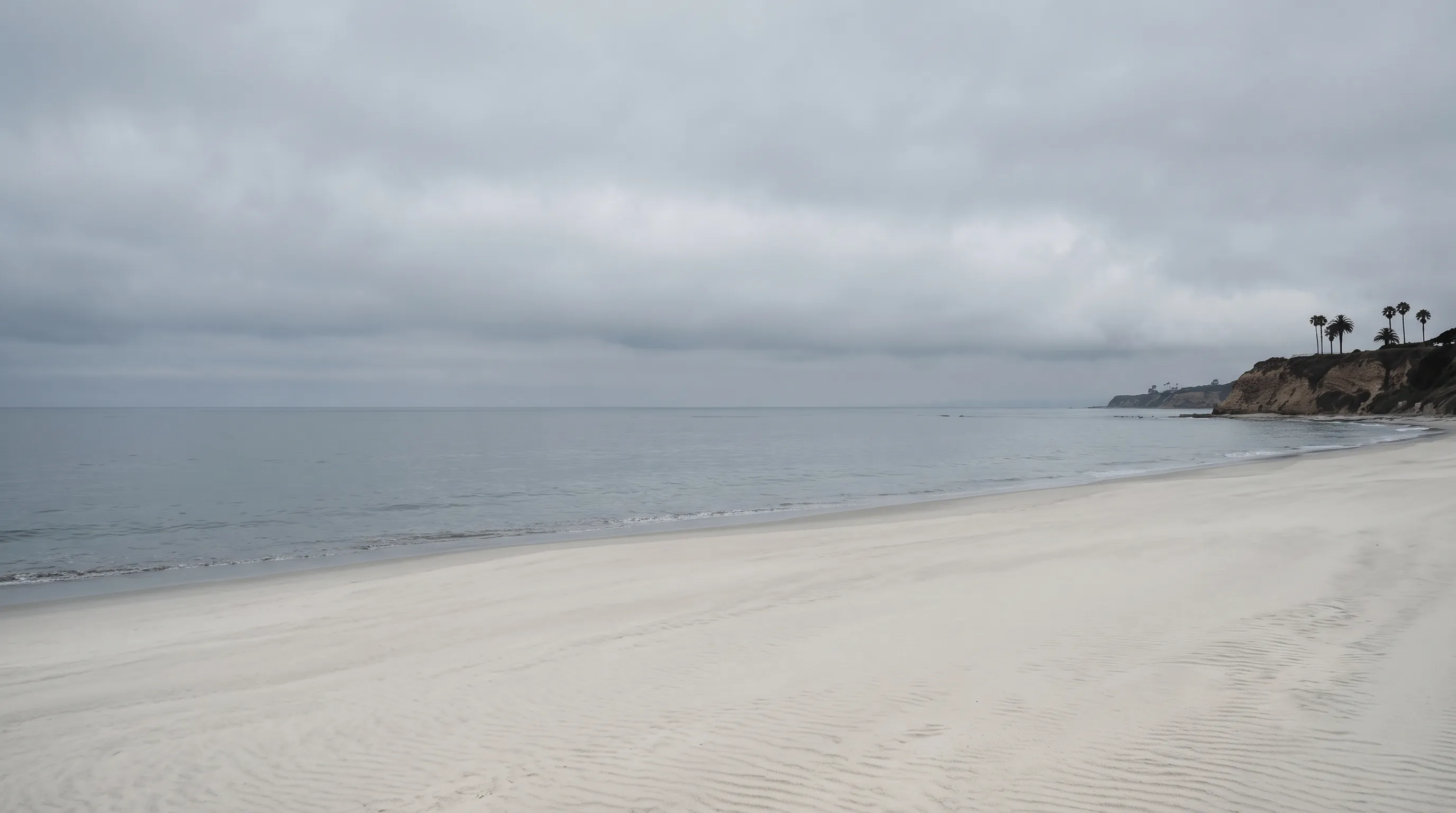
Every May and June, the same conversation happens in the treatment room. Someone has been diligent all winter, their pigmentation has visibly lifted, and then it comes back over a few grey weeks. The assumption is that something in the routine stopped working. Almost always, what actually happened is that the sunscreen came off the counter because the sky went white.
What the marine layer actually does
Cloud cover scatters visible light, which is why an overcast morning feels dim and cool. Ultraviolet radiation behaves differently. UVA in particular passes through thin cloud with very little loss, and the UV index across San Diego regularly sits at 8 to 10 through late spring and summer — including on mornings when it never feels bright. The light your eyes use to judge risk and the light your skin responds to are not the same light.
That gap matters more the more melanin you have. Pigment cells respond to UVA and to heat as well as to UVB, and in melanin-rich skin they respond enthusiastically. Melasma in particular is driven by a combination of hormones, heat and UVA — which is exactly the combination a mild, overcast San Diego day supplies without ever announcing itself.
Why this undoes treatment specifically
Any corrective work on pigmentation — peels, microchanneling, brightening protocols — briefly makes the skin more reactive while it repairs. Ask that skin to also handle unprotected UVA exposure and you get rebound pigmentation, often darker than what you started with. This is the mechanism behind most of the stories that begin "I had a peel once and it made my dark spots worse."
It is also why pigmentation is treated here as a series with home care between visits, rather than as a single dramatic session. The treatment lifts the pigment. The sunscreen is what decides whether it stays lifted.
What to do instead
- Apply broad-spectrum SPF 30 or higher every morning, regardless of what the sky is doing — make it part of getting dressed, not a weather decision.
- Use enough. Roughly two finger-lengths for the face and neck. Most people apply a third of what they need and get a third of the protection.
- Reapply if you are outdoors, and treat a car commute as outdoors — window glass filters UVB well and UVA poorly.
- Add a tinted formula if you are treating melasma. Iron oxides block visible light, which contributes to pigmentation in a way clear sunscreens do not address.
- Do not stop in winter. San Diego’s UV index does not drop to zero in December.
None of this is exciting, and that is rather the point. The most effective step in a pigmentation plan is the one you repeat two hundred times a year without thinking about it.
Written for KIAMO Skin in Mission Hills, San Diego.